

Client: Undisclosed Major UK Cement Manufacturer
Location: UK
Services: HV Earthing Condition Assessment, Soil Resistivity Testing, Compliance Review
Date: February 2026

Project Overview
EPS was commissioned to undertake a comprehensive earthing condition assessment at a UK-based high-voltage manufacturing facility. The site operates 11kV infrastructure supplied via a 33kV Distribution Network Operator (DNO) interface and supports continuous, high-load production processes essential to the UK construction supply chain.
With limited historical documentation available, the client required clarity on how the existing earthing arrangements were configured, whether they remained mechanically sound, and how they aligned with current compliance expectations across the two 11kV transformer compounds.

The assessment was undertaken to:
- Confirm the source and performance of the site’s earthing reference
- Benchmark the installation against BS EN 50522, BS 7430 and ENA TS 41-24
- Identify potential touch voltage, bonding or continuity risks
- Provide prioritised remedial actions to support ongoing compliance
Ensuring effective earthing is critical in high-energy industrial environments, where inadequate fault current dissipation can present both safety and operational risks. An inadequate earthing system cannot safely dissipate fault currents, increasing the risk of electric shock, fire, and equipment damage. Effective earthing provides a controlled path for fault currents and ensures protection systems operate as intended.
Client Background
The client operates a strategically significant cement manufacturing facility within the UK construction sector. The site supports large-scale production and relies on resilient electrical infrastructure to maintain uninterrupted operation.
As is common across legacy industrial facilities, elements of the HV earthing installation predate current standards. A formal condition assessment was therefore required to verify continued suitability and identify any compliance gaps.
EPS Approach
EPS adopted a practical, standards-led methodology combining detailed inspection, non-intrusive testing and soil modelling.
Our scope included:
- Visual inspection of earthing systems within the transformer compounds
- Review of earth bars, conductor sizing and termination integrity
- Assessment of the 33kV DNO intake substation earthing interface
- Non-intrusive clamp meter resistance testing across key earth connections
- Wenner soil resistivity testing and layered soil modelling
- Risk categorisation aligned to industry best practice
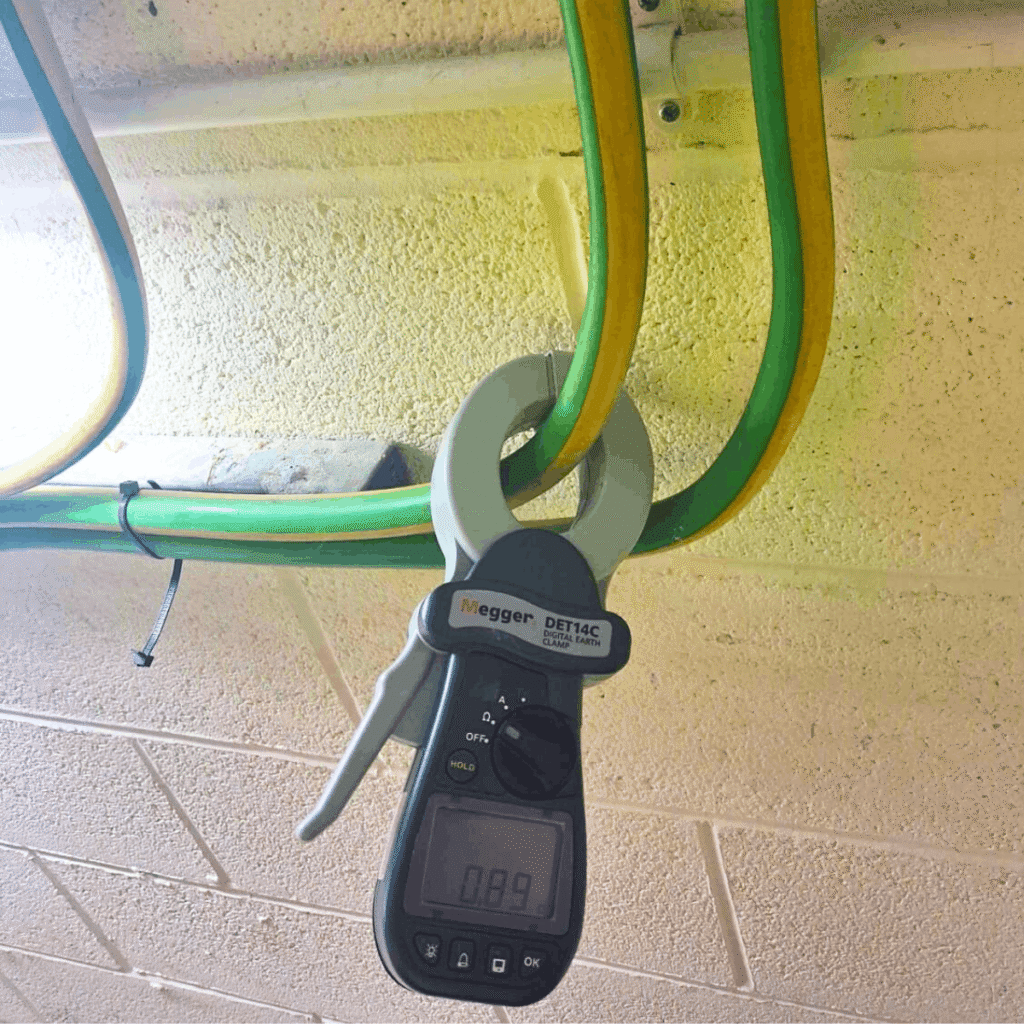
Due to live operational requirements, full isolation and fall-of-potential testing were not feasible. Clamp testing provided a safe and effective alternative, enabling comparative resistance measurements without disrupting production. The transformers support continuous production processes, meaning extended shutdown windows were not commercially viable at the time of inspection.
All analysis was undertaken in accordance with relevant standards, including BS EN 50522 (Earthing of power installations exceeding 1kV AC), BS 7430 (Protective earthing), ENA TS 41-24 and ENA EREC S34.
Technical Challenges Identified
The assessment identified strong evidence that the facility is deriving its primary earthing reference from the adjacent 33kV DNO substation rather than from a dedicated local earthing system.
Measured clamp resistance values were within expected ranges for the connections tested at the time of inspection.
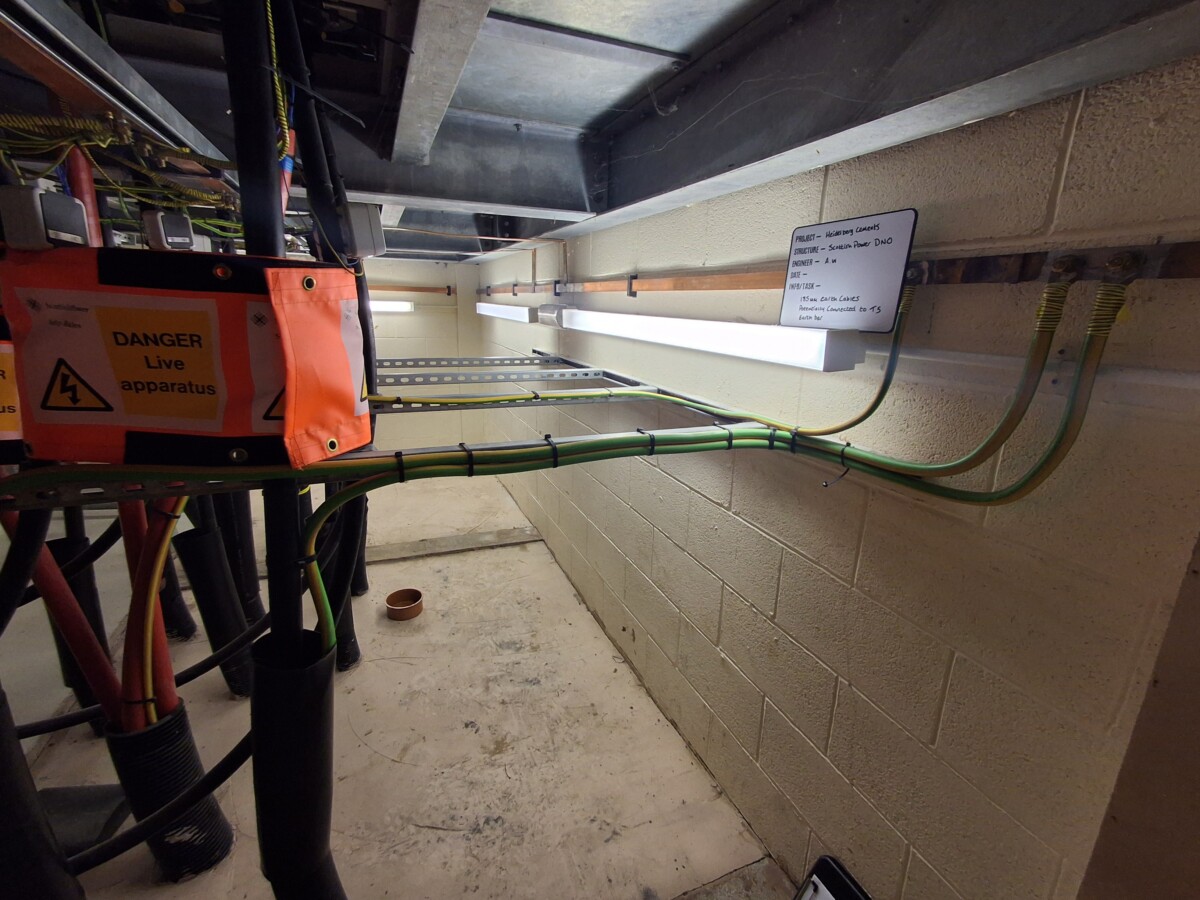
Additional site-specific challenges included:
- Operational constraints limiting intrusive testing methods
- General onset corrosion at exposed earth terminations
- Mechanical fixing deficiencies at T6 earth bar connections
- Limited dedicated bonding to metallic palisade fencing within transformer compounds
The fencing bonding issue was categorised as high priority because, under earth-fault conditions, the metallic palisade fencing could rise to a dangerous potential relative to true earth, creating a credible electric shock risk to personnel in contact with the structure.
Implementation
The project was delivered in structured phases to minimise disruption while ensuring robust engineering analysis.
Inspection and Configuration Review
EPS documented earth bar configurations, conductor cross-sections and bonding arrangements across both transformer pens and the DNO interface.
Earth Resistance Testing

Clamp meter measurements recorded:
- T5 earth connections ranging approximately from 0.05Ω to 3.28Ω
- 185mm² conductors associated with the DNO interface measuring approximately 0.89–0.94Ω
These comparative readings supported the conclusion that the transformer earthing system is connected to the DNO reference. Confirming this dependency is strategically important, as the site’s earth potential rise performance and overall compliance position are directly influenced by the DNO’s earthing design and fault level assumptions.
Soil Resistivity Assessment and Modelling
Three Wenner method tests were undertaken to establish site-specific ground characteristics. A layered soil model was developed, providing an evidence-based foundation for any future installation of a dedicated local earthing system.

Results & Impact
The assessment provided the client with a clear and evidence-based understanding of the site’s earthing configuration and associated risks.
Key outcomes included:
- Confirmation of likely reliance on the 33kV DNO earthing reference
- Identification of mechanical deficiencies requiring remediation
- High-priority recommendation to enhance the equipotential bonding of perimeter fencing
- Development of a site-specific soil resistivity model to inform any future compliant earthing design
- Delivery of a detailed technical report providing clear compliance benchmarking, risk categorisation, and prioritised remedial actions to support informed decision-making.
By adopting a non-intrusive testing methodology, EPS maintained production at a high-load facility without requiring disruptive HV shutdowns, while still delivering robust, standards-aligned engineering evidence.
This approach clarified the integrity and origin of the site’s earthing reference, quantified touch and step voltage risk, and established a defensible compliance position.
The client can now prioritise remedial works, mitigate credible safety risks, and plan future infrastructure upgrades based on verified soil and earthing performance data rather than assumptions.
Key Takeaways
This project highlights the importance of periodically benchmarking legacy earthing systems against current standards to ensure continued compliance and fitness for purpose. It also reinforces the need to formally evaluate reliance on external earthing references, particularly where fault performance assumptions may sit outside the site’s direct control.
Robust equipotential bonding of metallic structures within HV compounds remains fundamental to managing touch and step-voltage risk, while non-intrusive testing techniques can provide reliable engineering evidence when operational shutdowns are not viable.
Site-specific soil resistivity modelling further enables future upgrades to be designed on the basis of verified ground data rather than historic assumptions.
Ultimately, periodic earthing performance reviews form a critical component of long-term electrical safety, compliance assurance and asset resilience strategies.
Conclusion
EPS provided the client with a clear, evidence-based understanding of their earthing infrastructure, strengthening electrical safety assurance and establishing a robust, standards-aligned foundation for informed operational and compliance decision-making.
The project translated technical findings into prioritised, risk-aligned remedial actions, enabling the client to address identified safety exposures, reduce compliance uncertainty and plan future earthing improvements with confidence.
Let’s Discuss Your Earthing Requirements
If you are reviewing the condition of your own earthing system or planning upgrades to HV or LV infrastructure, an independent technical assessment can provide clarity before critical decisions are made.
Our team supports operators across industrial, generation, and infrastructure environments with site testing, modelling, and compliance-led design. If you would like to discuss a specific project or explore how your existing earthing arrangements compare against current standards, we are happy to have a conversation.