

Why Fault Levels, Earthing, and Grid Code Compliance Need Early Attention
A connection offer marks a real milestone. It supports the commercial case, gives the wider team something to plan around, and creates a sense of forward momentum. But it does not confirm that the project is technically ready to build, energise or export.
That distinction is becoming harder to ignore. Connection timetables, queue reform and revised network assumptions are putting greater scrutiny on which projects are genuinely deliverable. In that environment, technical issues that were once treated as later-stage design matters are now becoming programme risks and the window to resolve them without disruption is narrower than most teams expect.
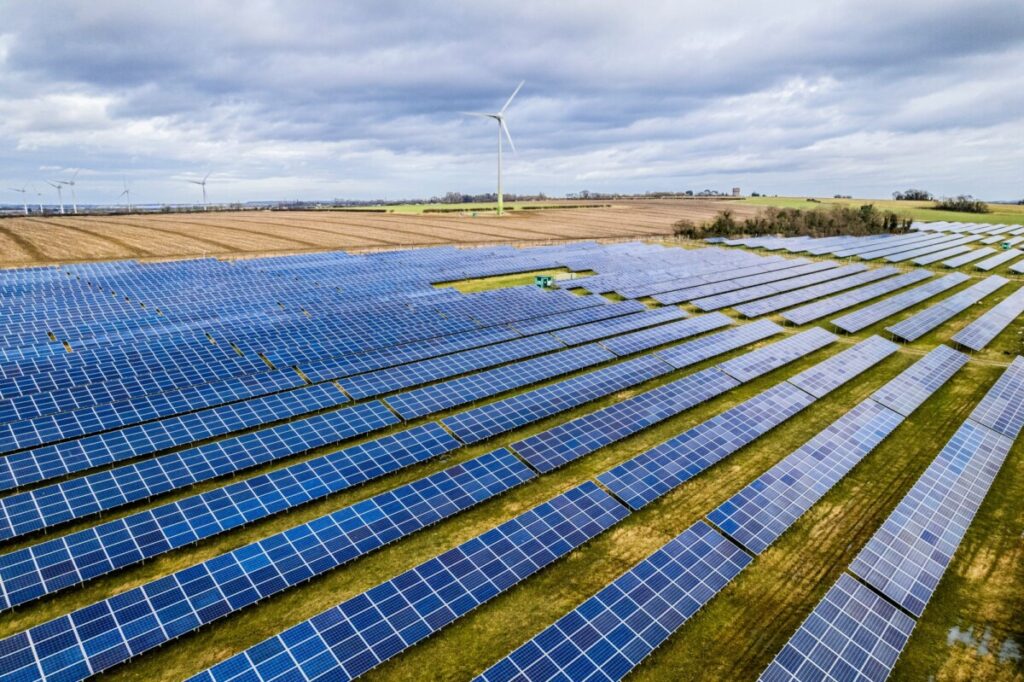
In this article, we look at why fault-level analysis, earthing design and compliance evidence need to be considered early in renewable energy projects, and how early technical input can help reduce costly redesign, commissioning delays, and avoidable programme risk.
The Connection Offer is a Starting Point, Not a Clearance
A connection offer reflects the network’s position at the time the application was assessed, using the information available then. Between that point and construction, things move. Available headroom may be lower than first assumed. Reinforcement requirements may grow. The actual generation profile, export arrangement or power factor assumptions in the design may have drifted from what was originally submitted. The network operator may require further evidence (harmonic studies, voltage assessments, protection coordination information) before the project can proceed.
Grid connection cannot be treated as an administrative process running alongside design. It has to be treated as a technical workstream that shapes design decisions. A project may still have a valid offer in place, but if the technical assumptions behind the design are no longer aligned with the network position, the risk has not gone away. It has moved further downstream, where correction is more expensive and more disruptive.
Fault Levels: A Feasibility Issue, Not A Late-Stage Check
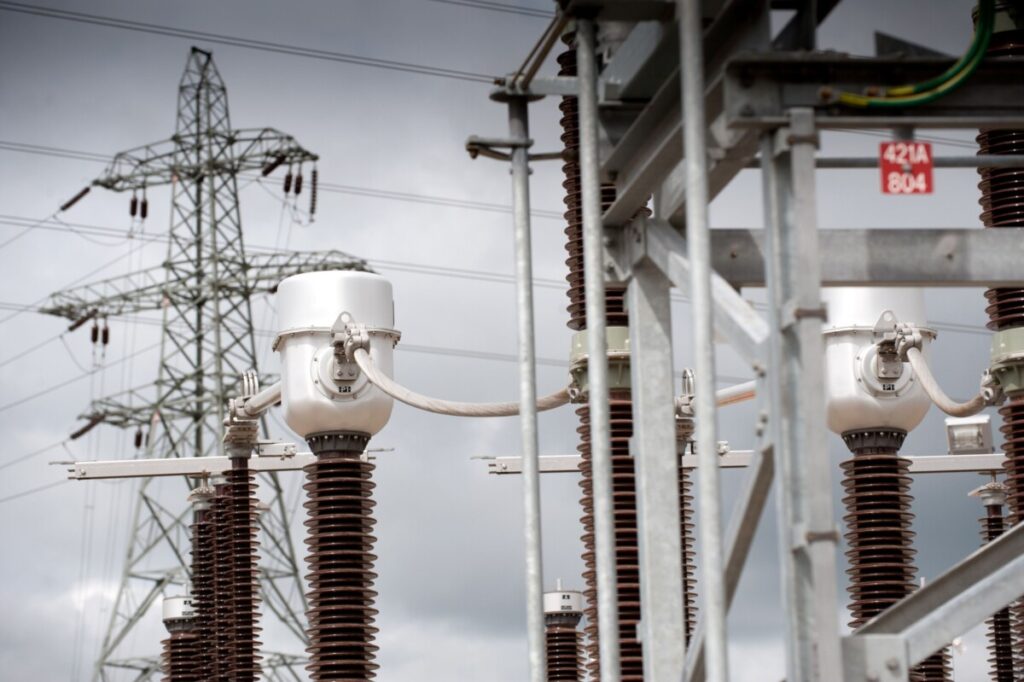
Fault level analysis establishes the maximum short-circuit current that can flow at a given point on the network under fault conditions. Across renewable energy projects, there are direct consequences for equipment ratings, protection settings and compliance.
The problem is rarely a lack of awareness. It is timing. In many schemes, fault level data is only confirmed during detailed design, by which point key equipment decisions have already been made. If the actual fault level at the point of connection exceeds the value assumed during specification, the options are limited, and none of which are easy: switchgear may need to be re-rated or replaced, the protection strategy may need to be revised, and additional fault current limiting measures may need to be introduced – all at a point in the programme where procurement commitments are already in place.
The same applies to protection settings. If relay calculations are based on network impedance data that later changes, the result is not a small technical correction. It can mean a full review of settings, retesting and renewed scrutiny before energisation.
A practical rule: if switchgear is to be specified before the project has tested whether the assumed fault environment is still valid, the project is already carrying avoidable technical exposure. A feasibility study using the best available network data will not answer every specific question. Still, it gives project teams a far better basis for making informed decisions than waiting until the options are at their narrowest.
Earthing: Where Late Decisions Trigger Wider Redesign
A compliant earthing system must keep touch and step voltages within acceptable limits under fault conditions. Demonstrating that requires soil resistivity data, fault current magnitude, fault clearance time and conductor arrangement. Those inputs do not sit in isolation – they affect site layout, conductor routing, buried infrastructure design, separation distances and, in some cases, protection performance.
When earthing work starts too late, the consequences extend beyond the earthing design itself. A model may show that the proposed arrangement does not achieve compliance without changing plant locations, revising conductor routing or adjusting fault clearance assumptions. At that point, the issue is no longer confined to one discipline. It starts to affect civil design, cable design, protection coordination and commissioning logic simultaneously.
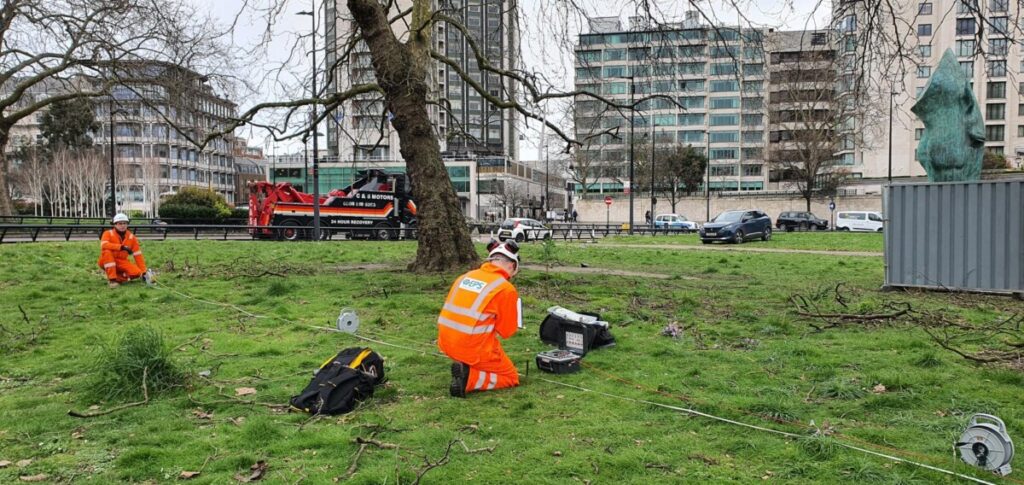
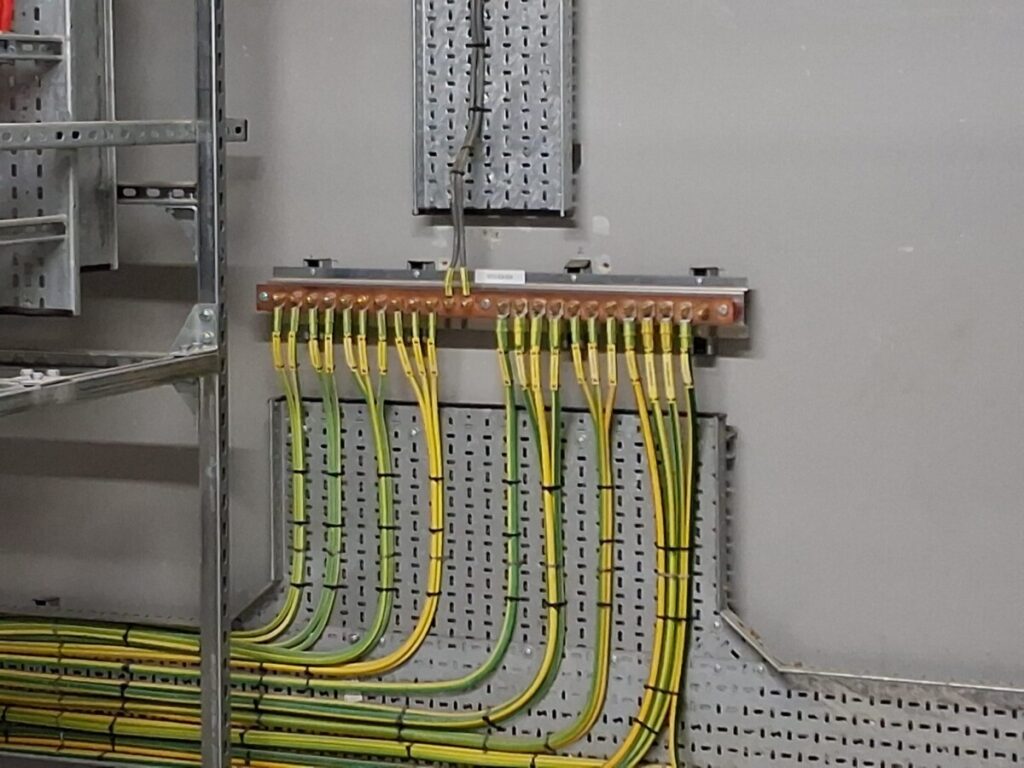
BS EN 50522 sets the compliance framework, but meeting it in a project setting depends on timing as much as the technical method. When the earthing strategy is developed while design choices are still open, it can guide the layout. If it is left until those choices are fixed, it becomes a constraint on the layout – one that is expensive to resolve. If the site layout is close to being approved for construction, but the earthing model has not had the data and time it needs to influence the design, a site layout redesign will more than likely be required.
Compliance Risk Begins Long Before Commissioning
One of the most consistent misunderstandings on grid-connected projects is treating compliance as something demonstrated at commissioning. In reality, it is the result of consistent technical assumptions being carried through the project from feasibility to energisation. Where those assumptions drift between studies, disciplines, and design stages, accumulating quietly until it surfaces at the worst possible moment.
The usual failures we tend to see during the design process include:
- Grid code and engineering recommendation requirements are reviewed after the design basis is completed and approved.
- Studies were produced at different stages using different network assumptions.
- Protection settings were developed separately from the earthing design.
- Commissioning evidence is asked to prove a consistency that the design process has not actually maintained.
These are not unusual failures. They are the normal consequence of treating compliance as a finishing exercise rather than a design discipline.
A project is genuinely ready to energise when the technical basis, protection philosophy, safety design and as-built configuration all still align with each other and with the current network position. Planning for that alignment from the outset is straightforward. Reconstructing it under programme pressure is not.
What EPS Sees in Practice
Across renewable energy projects involving onshore wind, solar, battery storage and hybrid generation, a consistent pattern appears. Our support is most valuable when EPS is engaged during the early stages.
When our electrical engineers are engaged at these stages, projects tend to progress seamlessly, with fewer avoidable technical issues. Where our guidance is brought in later, there tend to be multiple issues that could have been identified and addressed sooner.
Most of these issues come down to timing and coordination. Connection assumptions are carried forward after the network position has changed; fault-level studies are commissioned after switchgear decisions are made; and earthing or protection work starts too late to influence the design. EPS adds the most value when those studies are used early to guide decisions, not simply to validate a scheme that is already difficult to change.
A recent project highlights how these risks can emerge in practice when transient behaviour is assessed close to commissioning.
Project Update: Transformer Energisation for a UK Onshore Wind Farm

EPS recently supported a UK onshore wind project with a transformer energisation study for a 132/33 kV, 60 MVA grid transformer and associated 33 kV collector network. Using transient modelling in DIgSILENT PowerFactory, the study assessed magnetising inrush current, sympathetic inrush interaction across the wind turbine network, and the resulting rapid voltage change against P28 limits.
The analysis identified that uncontrolled energisation carried a limited compliance margin and could introduce operational constraints. EPS defined a controlled energisation strategy to manage switching conditions and reduce voltage disturbance risk, enabling the client to approach commissioning with greater confidence and avoid potential delays or long-term operational restrictions.
This reflects a wider pattern we’re seeing across renewable projects, where energisation and compliance risks often only become visible once detailed technical behaviour is properly assessed.
The Questions Worth Asking Earlier
The most effective point to address these risks is before technical decisions become expensive to reverse. In practice, that means:
- Are the connection assumptions still technically credible against the latest network position – or have they simply been carried forward?
- Has the fault-level current around the proposed network been checked before the switchgear has been specified?
- Has earthing had enough input to influence plant arrangement before the layout is approved by construction?
- Has protection coordination accounted for transient events and energisation behaviour, not only steady-state conditions?
- Is the evidence package within the power system studies and design consistent with the as-built design and the assumptions used across all studies?
Projects that ask these questions earlier avoid complexity later during construction and commissioning. Grid-connected renewable schemes are inherently complex. What they avoid is finding that a foreseeable technical issue has surfaced at the exact point where time, flexibility and budget have all run out.
Planning a renewable project or approaching a key milestone?
Whether you’re progressing a connection offer, finalising design, or preparing for commissioning, EPS provides in-depth power system studies and design support to help you progress with confidence.