
Q3 at EPS
The past three months have seen plenty happening across EPS, with projects progressing and continued growth across the business.
During Q3, our engineers have continued to support major BESS developments as well as a range of other energy and infrastructure projects. We’ve also shared several new case studies, taking a closer look at the technical challenges our teams are helping clients address.
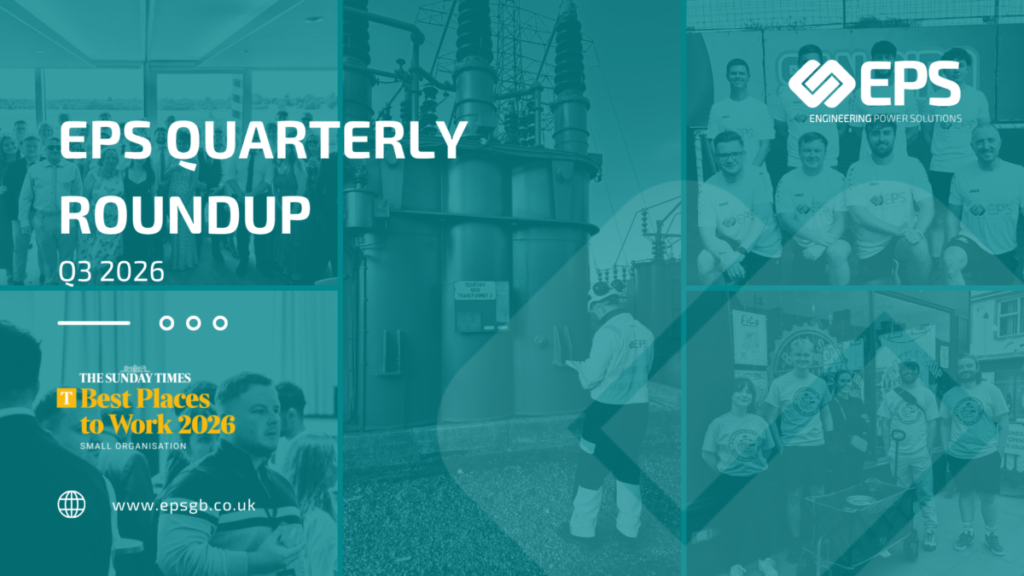
The EPS team has continued to grow too. Five new colleagues joined us during the quarter, and we launched our new Talent Bank to help us connect with people interested in future opportunities. We also caught up with Adam Harper after his first three months as a Power Systems Engineer.
There has been plenty happening outside project delivery as well, with a busy calendar giving the team opportunities to get together and support some important causes.
Here’s what we’ve been up to during Q3 2026.
Project Highlights
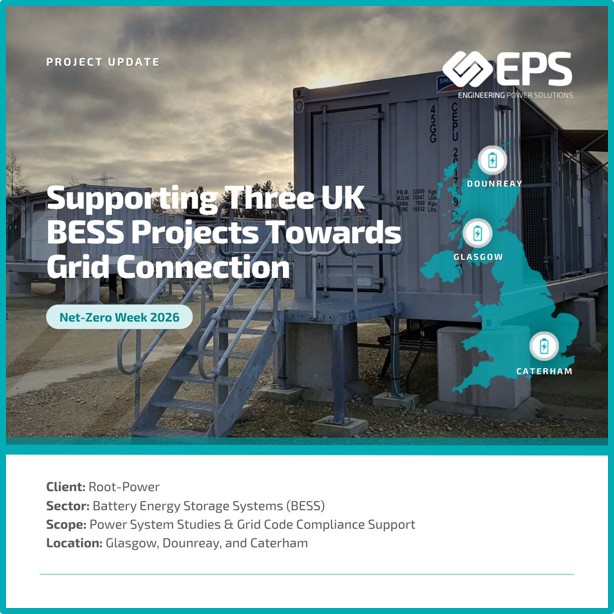
Supporting Three UK BESS Projects Towards Grid Connection
With a combined capacity of 450 MW, each project brings its own technical and connection requirements. Our work helps address these requirements and supports each site’s progress toward construction.
EPS is pleased to support Root-Power across three BESS projects in Glasgow, Dounreay, and Caterham, providing electrical design, power system studies, and grid connection support.
Case Studies:
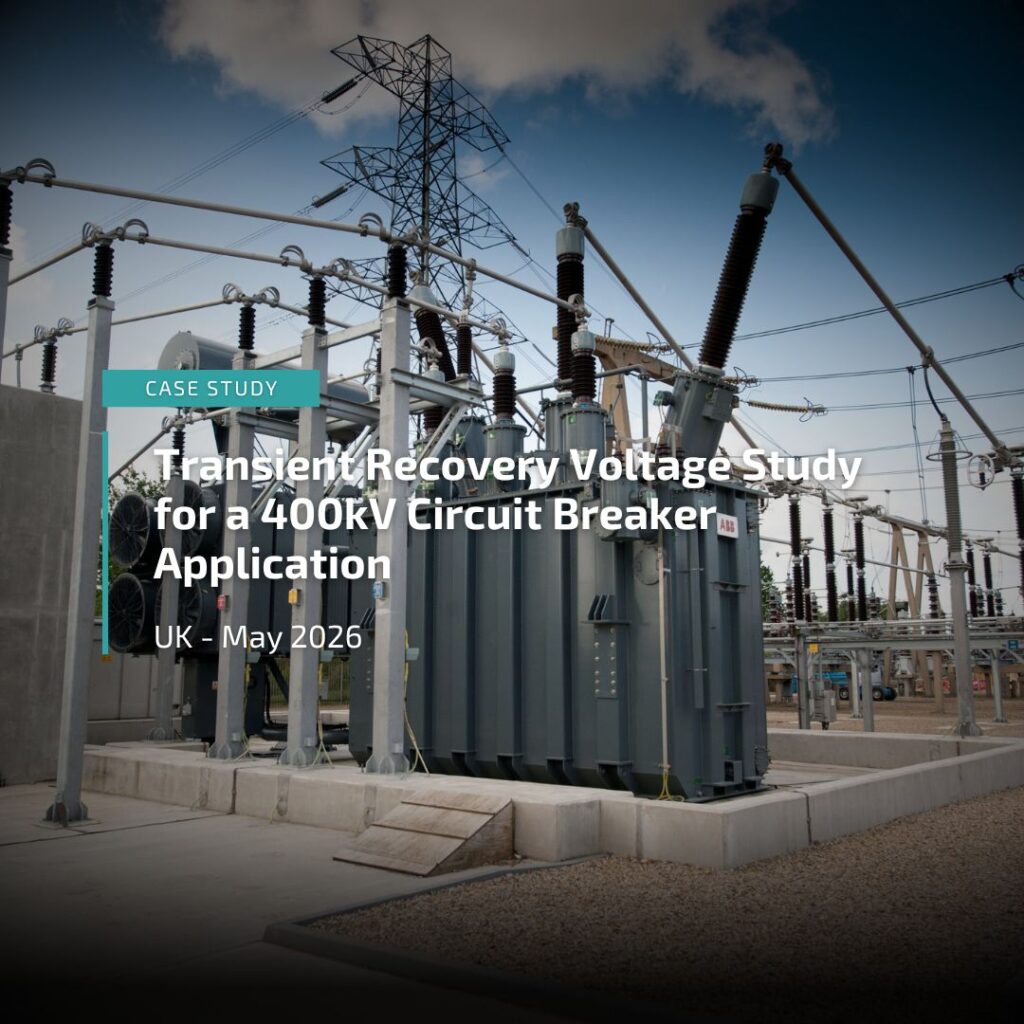
Transient Recovery Voltage Study for a 400 kV Circuit Breaker Application
EPS was contacted to provide an independent assessment of an existing in-service 400kV circuit breaker after an equipment manufacturer identified it as unsuitable for the application.
Our engineers carried out Transient Recovery Voltage (TRV) and Rate of Rise of Recovery Voltage (RRRV) modelling, assessing the breaker against the relevant fault levels to determine whether the proposed equipment changes were necessary.
The study confirmed that the existing circuit breaker was suitable for the application, helping the client avoid unnecessary 400kV network modifications, associated costs and potential lost generation revenue.
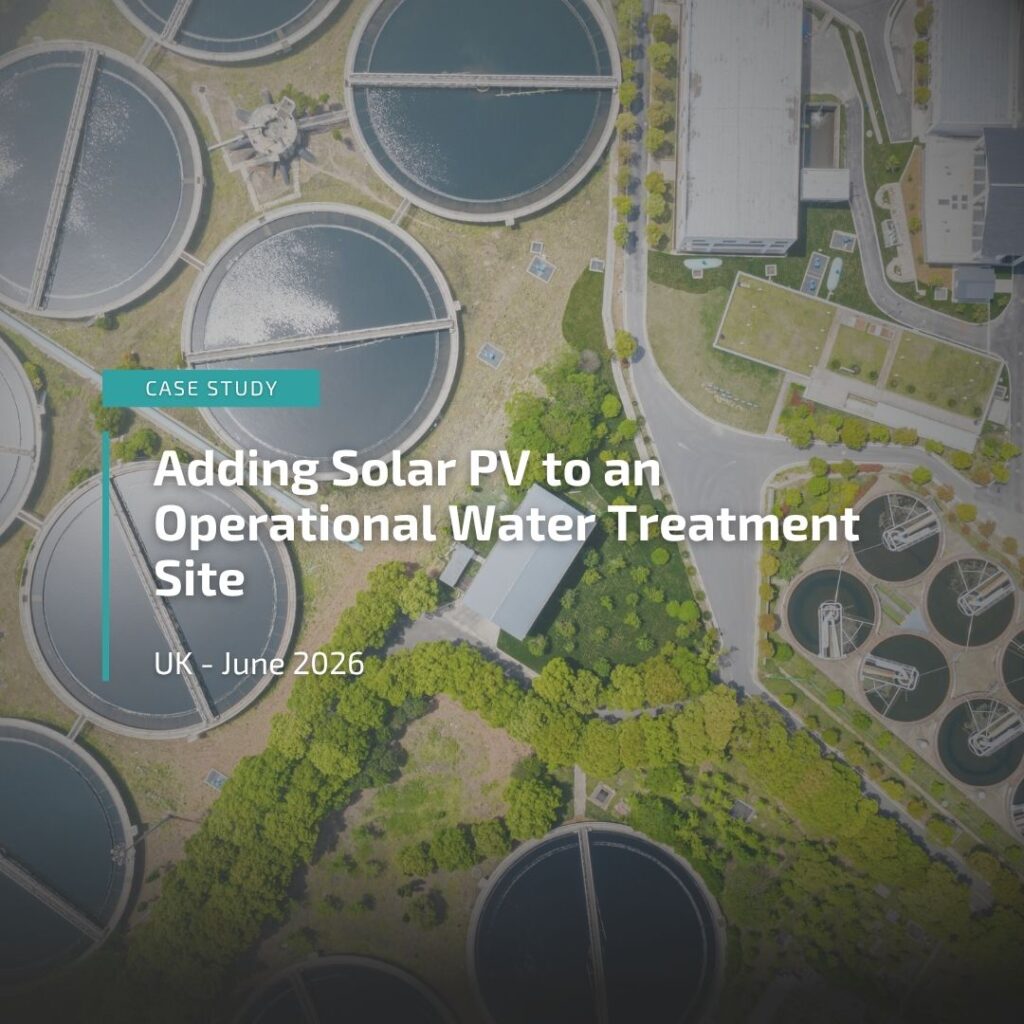
Adding Solar PV to an Operational Water Treatment Site
EPS recently supported a major UK-based water and wastewater operator with the proposed connection of an 815.1 kWp solar PV system at a live water treatment site.
Our engineers carried out load flow, short-circuit and protection grading studies to assess how the new generation would interact with the existing electrical network. The studies confirmed acceptable busbar voltages and transformer capacity, while also identifying several areas requiring further consideration.
These included an existing transformer operating close to its assumed rating, two switchboards requiring further fault-level assessment and protection settings requiring verification. Identifying these constraints early provided the client with clear actions to address before progressing to detailed design.
Earthing and Bonding Survey for a Battery Energy Storage Compound
EPS recently carried out an earthing and bonding gap analysis at an operational BESS compound, assessing the installation against the original earthing design.
While much of the visible installation was found to be in acceptable condition, the survey identified several areas requiring attention. These included signs of corrosion at transformer earth terminations and the absence of a recent earthing system test and inspection record.
The findings provided the client with a prioritised view of the remedial work and further testing required, as well as areas that could not be fully verified without additional access. This gives the client clearer evidence to support ongoing maintenance and compliance activity.
Together, these projects reflect both the scale and diversity of work delivered in the quarter, as well as our ability to support clients in different sectors and stages of project development.
Inside the Engineering
UK Renewables: State of Play | Q2 2026
In Q2 2026, renewables provided 53% of UK electricity, while 2.4 TWh of potential wind generation was curtailed, equivalent to around 15% of potential output.
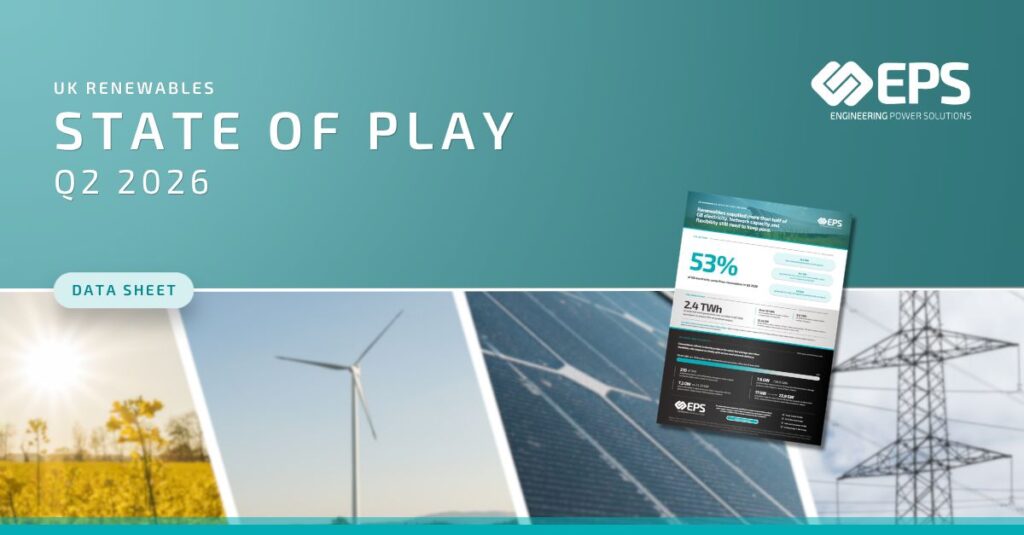
Our latest data sheet looks at these figures alongside the wider renewable energy picture, covering generation, curtailment, connection offer progress and energy storage installations.
With grid-scale battery capacity reaching 7.3 GW in June, against a Clean Power 2030 ambition of 23 to 27 GW, the data highlights both the continued growth of renewable energy and the network constraints that could influence how quickly new projects progress.
People & Capability
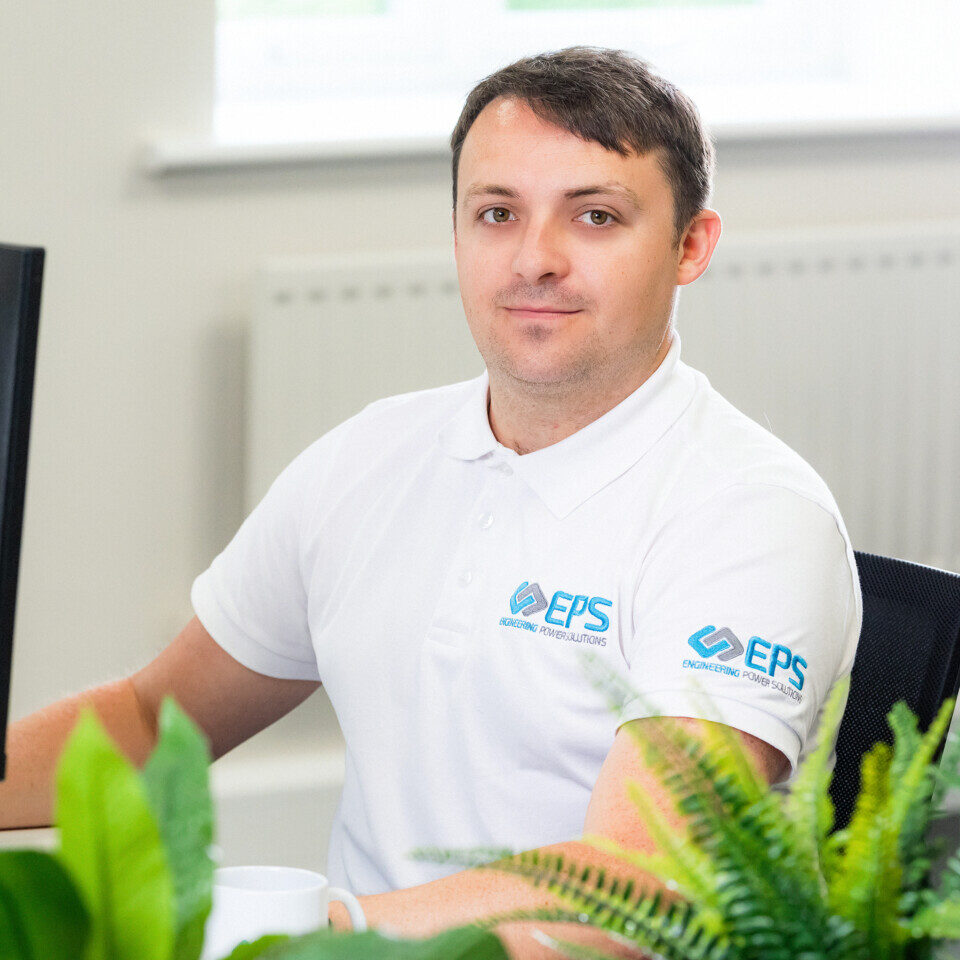
Staff Spotlight: What Your First Three Months at EPS Can Look Like – Adam Harper
Earlier this quarter, we caught up with Adam Harper to reflect on his first three months at EPS after joining as a Power Systems Engineer in April.
By that point, Adam had already worked on a wide range of live technical studies, with exposure to projects across different sectors and voltage levels between 11kV and 400kV. His work included earthing and arc flash studies, as well as short-circuit, load flow and lightning risk assessments.
The feature looks back at Adam’s early experience with EPS, including the projects that helped build his technical knowledge and confidence, the value of the internal review process and his experience representing EPS at All-Energy in Glasgow.
Putting Engineering into Practice
Recently, Graduate Electrical Engineer Andrew Parkes joined Specialist Earthing Coordinator Adam Whalley at a large renewable energy plant, gaining valuable site experience and seeing first-hand how engineering drawings translate into live electrical installations.
The visit gave Andrew an opportunity to see transformers, BESS and earthing installations up close, building on the technical knowledge developed through his day-to-day engineering work.
Experiences like this form an important part of development at EPS, giving engineers greater exposure to the equipment and systems they work with and a better understanding of how design decisions translate into practice.
What Makes a Great Place to Work?
Following EPS being named one of The Sunday Times Best Places to Work 2026, we took a closer look at the employee feedback behind the recognition.
Our engagement results showed 93% employee engagement, with 96% of colleagues saying they feel they are developing in their role and 97% feeling they are treated with respect. The survey also recorded a 0% flight risk across the team.
As EPS continues to grow, these results provide a useful measure of how our culture is developing alongside the business, and reflect the importance placed on giving people opportunities to take ownership and develop their careers while enjoying the work they do.
Team Growth
We were pleased to welcome several new members to the EPS team this quarter as we continued to strengthen our engineering and project delivery capability.
In July, John Swan-Learoyd-Ashman joined as a Graduate Electrical Engineer, along with James Coxon, our new Junior Project Manager. We also welcomed Jason Deighan as Associate Technical Director, further strengthening our team in Glasgow.
September brought two more additions to the engineering team, with Ross MacKay joining EPS as a Senior Electrical Engineer, followed by James Harrington as a Graduate Electrical Engineer.
We’re delighted to have them all on board and look forward to seeing the experience and fresh perspectives they bring to EPS.
Register Your Interest in Future Opportunities
EPS is growing because our clients value both the work we deliver and how we deliver it. That continued demand is creating opportunity across our team.
We’re always keen to hear from experienced professionals as well as engineers looking to take the next step in their careers. Joining our Talent Bank helps us understand your experience and interests so we can get in touch when a suitable opportunity becomes available.
If you’re interested in joining a growing, founder-led business where technical excellence, collaboration and professional development are valued, register your interest here:
Events & Community Engagement
Team Trip to York Races
Our annual trip to York Races returned this summer, bringing colleagues from across EPS together for one of the highlights of our social calendar.

As the team has continued to grow, each year has meant booking a little more space than the last. This year’s event was another opportunity for colleagues to spend time together away from project work, catch up with familiar faces and get to know newer members of the team.
Fundraising at EPS: Supporting Three Important Causes
August was a busy month for EPS, with colleagues taking on two very different challenges in support of the Great North Air Ambulance Service (GNAAS) and The Headlight Project.
First, the team completed pALEgrimage 2026, transporting a full cask nearly 15 miles from Guisborough to Stockton without motorised transport. Over £700 was raised for GNAAS, with EPS directors Adrian and Joanne Hall matching the amount raised to double our contribution.
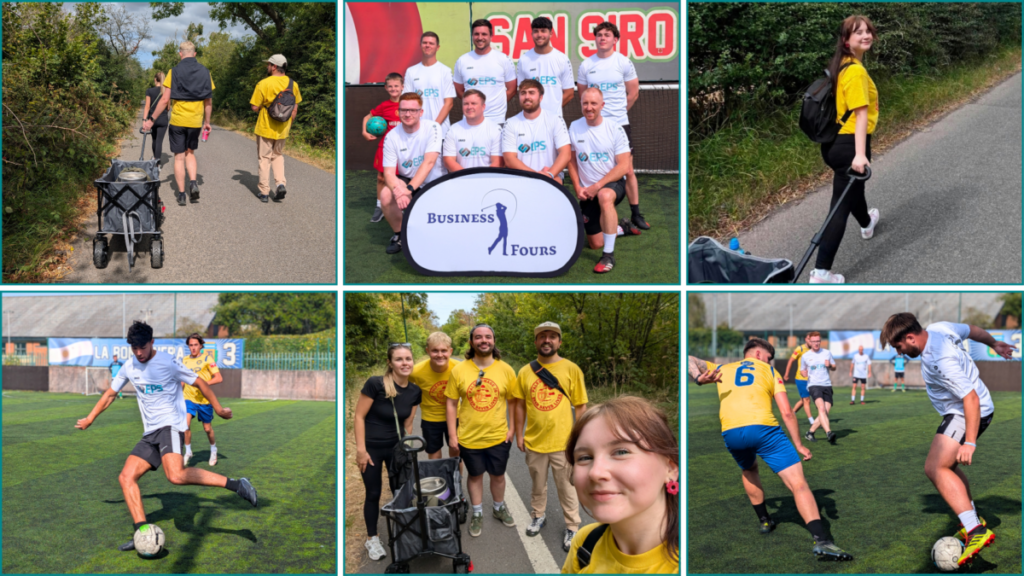
Less than two weeks later, Team EPS returned to the Business Fives Tees Valley 5-A-Side Tournament, going unbeaten and winning the Europa League final to secure a place at the National Finals. EPS also raised £515 for The Headlight Project, including a £150 contribution from Business Fives following the team’s win.
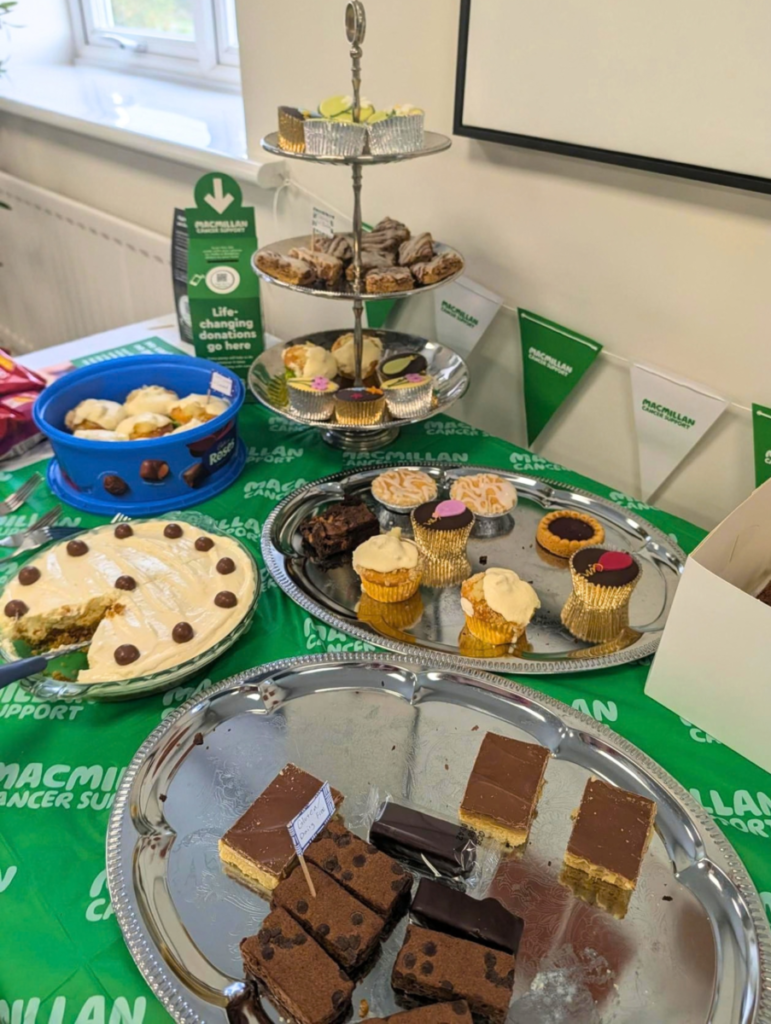
Our September quarterly team meeting came with plenty of homemade baking as Team EPS also took part in a Macmillan Coffee Morning.
Colleagues from across the business came together to catch up on the past few months and look ahead to what’s coming next, with the Coffee Morning raising money for Macmillan Cancer Support at the same time.
Together, the team raised over £100 for Macmillan Cancer Support, helping support the charity’s work with people living with cancer and their families.
A huge thank you to everyone who took part, donated and supported all events.
ETAP Spark London 2026
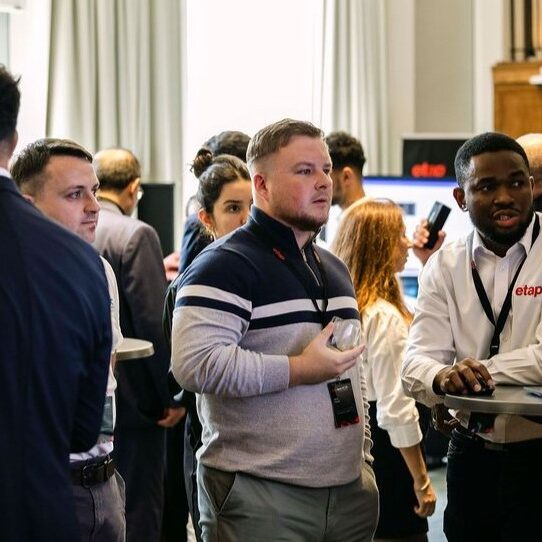
EPS Power Systems Engineers Aaron Pascoe and Adam Harper attended ETAP Spark London, an industry event focused on power system modelling and its application across the electrical engineering sector.
The programme covered developments affecting power systems engineering, including growing electricity demand from data centres and the increasing role of AI. Adam was particularly interested in how other engineers are approaching studies for data centres and how ETAP plans to incorporate AI into its modelling and analysis tools.
For Aaron, the event was also a valuable opportunity to step outside day-to-day project work and connect with other engineers using ETAP across a range of projects. Meeting new contacts and exchanging experiences gave both Aaron and Adam a broader view of how the software is being applied across the industry.
Moving Forward
The projects highlighted throughout Q3 reflect the range of challenges our clients are currently navigating, from integrating new generation and progressing grid connections to assessing and maintaining existing electrical infrastructure.
EPS continues to support projects at different stages of development, providing the specialist engineering input needed to understand technical constraints, inform design decisions and support progress towards delivery.
Along with project work, we’ll continue investing in our technical capability and growing the EPS team, with new opportunities for experienced professionals and those developing their careers in electrical engineering.
We’re looking forward to a busy final few months of 2026 and continuing to support our clients as their projects progress.