
A Career Built Through Opportunity
Four years doesn’t sound like a long time.
But at EPS, it can take you from a Graduate Engineer to leading work across major power systems projects.
That’s Tom’s journey.
Tom joined EPS as a Graduate Engineer and, in just four years, progressed through three promotions to become a Senior Power Systems Engineer. His growth didn’t happen by chance. It came from being trusted with responsibility, given space to develop, and supported by the wider team along the way.
Today, Tom leads projects across complex electrical networks while also mentoring the next generation of graduate engineers entering the business.
What Does a Power Systems Engineer Do at EPS?
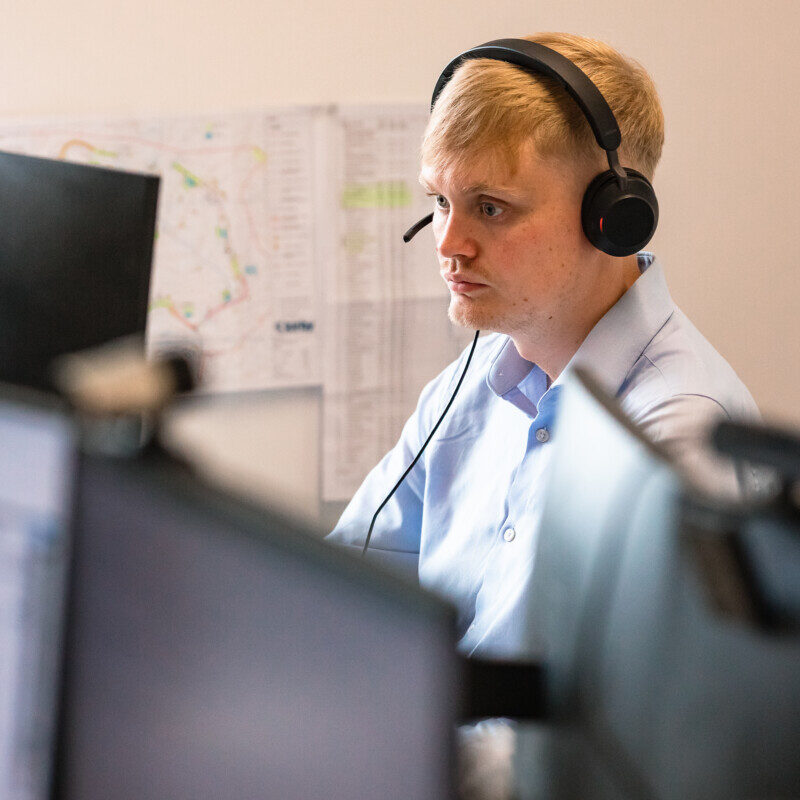
At EPS, Tom works closely with our in-house electrical design engineers and earthing coordinators, bringing together different disciplines to solve complex problems.
He also leads a team of power systems engineers, delivering studies across electrical networks using tools such as ETAP, DIgSILENT, PSCAD, and CDEGS.
Projects regularly involve:
- Load Flow & Short Circuit Analysis
- Protection Coordination Studies
- Arc Flash Risk Assessments & Mitigation Studies
- Earthing Design Studies
- Grid Code Compliance Studies (G99, G5/5, P28)
- EMT Modelling & Insulation Coordination Studies
Each project depends on precision, judgement, and a clear understanding of how design decisions translate into live operational environments
From Graduate to Senior in Four Years
As Tom’s experience developed, so did his responsibilities.
Over time, he progressed from supporting studies to:
- Delivering technical studies independently
- Building complete network models
- Presenting conclusions directly to clients
- Leading and mentoring graduate engineers

Across the team, over 70% of engineers accessed formal training or CPD in the past 12 months, supporting development towards chartership and deeper technical specialisation.
Professional development at EPS goes beyond technical capability. Engineers gain confidence, ownership, and exposure to real project decision-making as their experience grows.
Why the Work is Different at EPS
At EPS, engineers are involved across the full technical workflow, not just isolated stages of a project.
This gives engineers exposure to the full picture and a clearer understanding of how each stage connects and influences the next.
That means:
- Broader technical exposure across sectors and voltage levels
- Ownership of complex problems from start to finish
- Involvement in decisions that shape real project outcomes
It’s a different way of working with visibility across the full project lifecycle, not just part of it.
The Impact You Make
Power system studies inform decisions that carry real weight.
For Our Clients
Work is used to make informed decisions early, helping reduce risk, control costs, and avoid unnecessary redesign.
For Your Career
Strong delivery builds trust with clients and within the team. That credibility opens up further responsibility and progression, grounded in the quality of your work.
For You
Projects are peer-reviewed across the team. You’re not only receiving feedback on your own work but also contributing to others. Building technical judgement, collaboration, and learning across a wide range of projects.
The Culture at EPS
EPS operates as a founder-led, family-owned consultancy, and that still shapes the way the business feels today.
As one of our first graduates, Tom has seen the team double in size while still retaining a close, connected way of working that hasn’t been lost along the way.
People are visible here. Contributions are recognised, and engineers are involved in conversations that matter to the work they’re delivering.
Recognition happens in different ways. Formally, but also in smaller moments too. Whether that’s team social events, time spent together outside of projects, or the way good work is acknowledged day to day.

“Would a Smaller Consultancy Provide Enough Challenge?”
For Tom, it has provided the right kind of challenge.
The variety of work, level of responsibility, and involvement in real project decisions have all contributed to his development as an engineer.
Looking ahead, his focus is on achieving chartered status and continuing to develop the next generation of engineers joining the team
Thinking About Your Next Step?
Engineers often have questions when they’re considering their next move:
- Will the work challenge me?
- Will my judgment matter?
- Will I keep progressing?
For Tom, those questions became the reason he chose EPS, and his journey reflects what working here really means.
He said yes to those questions. And we’re so glad he did.
For engineers who value ownership, exposure, and meaningful decisions, this is what working at EPS really means. If this sounds like the kind of environment you’re looking for, explore our current opportunities or learn more about careers at EPS: